© 2018 GrandPalaisRmn (musée du Louvre) / Michel Urtado
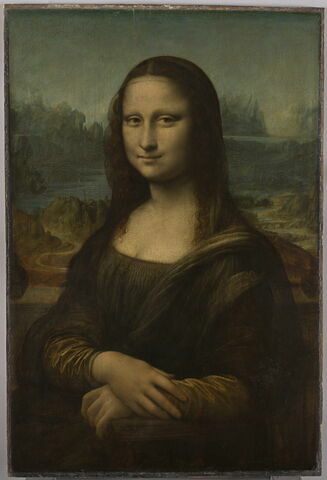
Mona Lisa
Leonardo da Vinci
Must seeWhy it matters / What to look for
Why it matters. Leonardo turned a formal court portrait into the illusion of a living encounter. The turning body, direct gaze and ambiguous smile give the sitter a psychological presence that reshaped European portraiture.
- The face: The outlines around the eyes and mouth seem to dissolve. Leonardo built them from extremely thin translucent layers—the technique known as sfumato, which softens transitions between light and shadow.
- The pose: The figure is not strictly frontal. Her upper body turns toward you, making the formal pose feel like the end of a natural movement.
- The hands: Resting one over the other on the chair arm, they anchor the sitter in the foreground and reinforce her composure.
- The landscape: Far behind her, roads, water and mountains gradually lose their sharpness, creating atmospheric depth.
Good to know. Probably begun around 1503, the portrait stayed with Leonardo for years; he continued refining it, took it to France and left it unfinished at his death.